
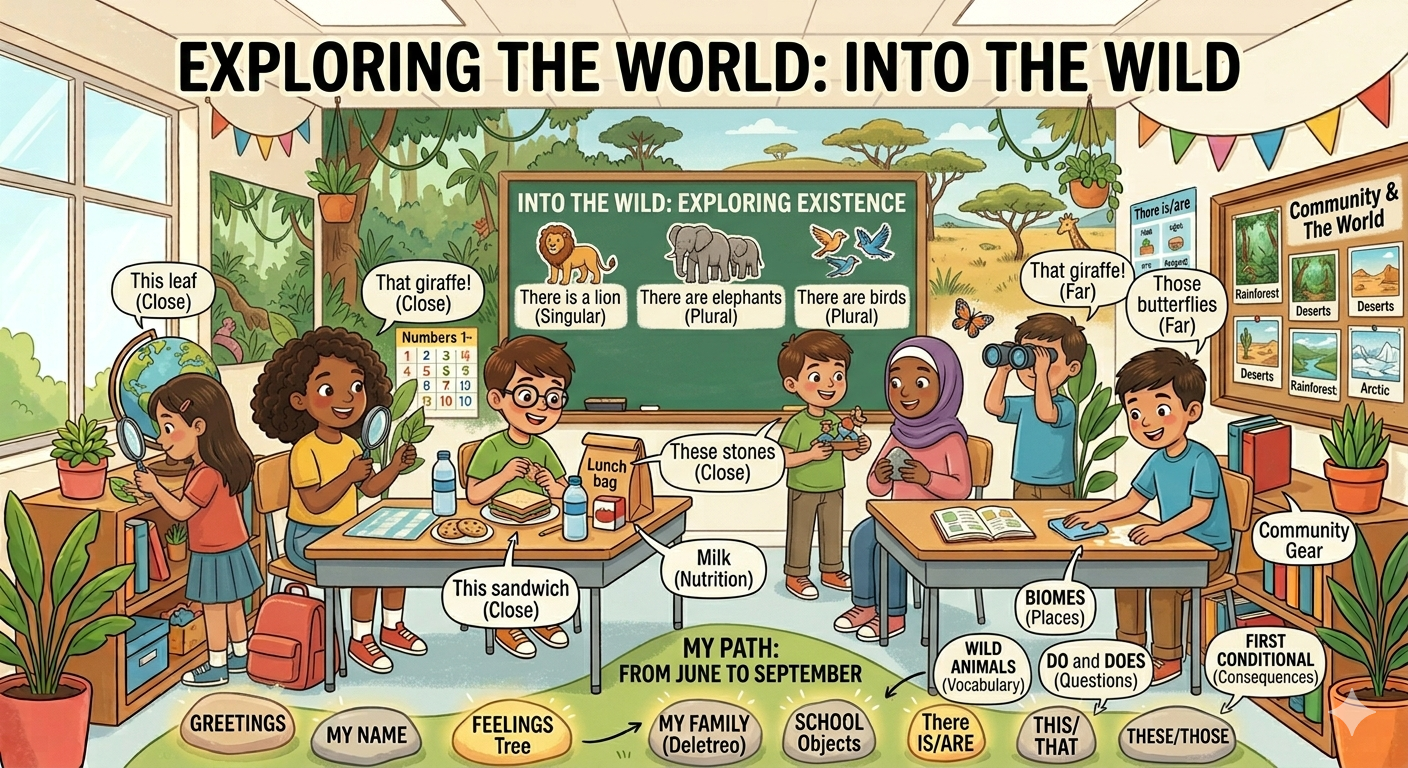
TEMA 3: EXPLORING THE WORLD: INTO THE WILD
Concepto: Explorar la vida silvestre es abrir una ventana a la responsabilidad
global. Aprender sobre animales salvajes y sus hábitats es una herramienta de
observación ética para entender nuestro papel como guardianes del planeta.
Objetivo: Identificar animales salvajes y lugares públicos, describiendo hábitats y
promoviendo el respeto por la biodiversidad.
Fecha: Lunes 10 de agosto del 2026
Actividad: Lluvia de ideas: «Into the Wild». Escuchamos sonidos de la selva y
adivinamos animales. En la segunda hora, los niños dibujan el paisaje que
imaginaron y etiquetan a Lion, Elephant y Monkey con flashcards gigantes.
Fecha: Martes 11 de agosto del 2026
Actividad: «Wild City in a Box». Iniciamos la construcción de una maqueta de
hábitat. En la segunda hora, colocan los animales y practican reportar existencia:
«There are two monkeys in the jungle», integrando manualidades y gramática.
Fecha: Miércoles 12 de agosto del 2026
Actividad: Mapa Conceptual: «Wild vs. City». Comparamos los espacios y
habitantes de ambos mundos. En la segunda hora, registran las diferencias en sus
cuadernos usando oraciones descriptivas y dibujos clasificatorios.
Fecha: Jueves 13 de agosto del 2026
Actividad: Safari Virtual. Usamos binoculares de cartón y mapas. Practicamos
señalar animales a lo lejos: «Those are lions». En la segunda hora, escriben una
bitácora de su safari imaginario detallando lo que «vieron».
Fecha: Lunes 17 de agosto del 2026
Actividad: Cartel de Protección. Discutimos el respeto por la vida salvaje.
Diseñamos mensajes: «Respect those lions». En la segunda hora, decoramos los
carteles con materiales naturales (hojas secas) para darles realismo y conciencia.
Fecha: Martes 18 de agosto del 2026
Actividad: Cuadro Comparativo de Contextos. Analizamos singulares y plurales de
la ciudad frente a la selva (This building vs. Those lions). En la segunda hora, los
niños crean oraciones cruzadas comparando ambos mundos.
Fecha: Miércoles 19 de agosto del 2026
Actividad: Debate: «Bienestar Animal». Analizamos si los animales son felices en
cautiverio. En la segunda hora, los niños proponen 2 mejoras para que los animales
vivan mejor, usando las estructuras de la unidad.
Fecha: Jueves 20 de agosto del 2026
Actividad: Redacción de Párrafo. «Guardianes de la Naturaleza». Sharon ayuda con
el vocabulario técnico. En la segunda hora, los niños terminan sus escritos y los
decoran para el portafolio final.
Fecha: Lunes 24 de agosto del 2026
Actividad: Safari Virtual con Mapas. Extendemos mapas gigantes. Practicamos la
distancia: si el animal está lejos, usamos Those; si está cerca, These. En la segunda hora, registran 5 observaciones de su safari en el cuaderno cuidando la
concordancia gramatical.
Fecha: Martes 25 de agosto del 2026
Actividad: Exposición de Demostrativos. Cada niño elige un objeto de su maqueta
y lo explica usando el puntero. En la segunda hora, realizamos un taller escrito de
refuerzo transformando oraciones de singular a plural (Ej: This lion -> These lions).
Fecha: Miércoles 26 de agosto del 2026
Actividad: Cuadro Comparativo: Selva vs. Ciudad. Dividimos el cuaderno en dos y
escribimos oraciones comparativas: «This building is tall / That giraffe is tall». En la
segunda hora, compartimos las comparaciones en voz alta para trabajar la fluidez.
Fecha: Jueves 27 de agosto del 2026
Actividad: Discusión de Bienestar Animal. Observamos imágenes de zoológicos
vs. reservas. En la segunda hora, los niños redactan un compromiso personal en
inglés sobre cómo cuidar los parques naturales cuando los visiten.
Fecha: Lunes 31 de agosto del 2026
Actividad: Argumentación: «My Voice for Nature». Redactamos un párrafo corto: «It
is important to protect animals because…». En la segunda hora, decoran su párrafo
y practican leerlo con seguridad frente a sus compañeros.
Fecha: Martes 01 de septiembre del 2026
Actividad: Preparación: «Wild Guide for Tourists». Dividimos el salón en grupos de
guías turísticos por hábitats. En la segunda hora, preparan sus materiales visuales
(mapas o flechas) para la gran presentación final.
Fecha: Miércoles 02 de septiembre del 2026
Actividad: Ensayo del Proyecto Grupal. Los grupos practican sus recorridos. Se
pasa corrigiendo el uso de There is / There are. En la segunda hora, realizamos una co-evaluación entre grupos dándose consejos positivos.
Fecha: Jueves 03 de septiembre del 2026
Actividad: Gran Final: Safari en el Salón. El aula se convierte en reserva natural.
Los grupos guían a los invitados por sus hábitats. Se evalúa el vocabulario del
periodo y se entregan insignias de «Expertos en Vida Silvestre».
Fecha: Lunes 07 de septiembre del 2026
Actividad: Cierre de Portafolio. Usamos las dos horas para organizar todos los
trabajos, fichas y dibujos del periodo en el «Family & Food Portfolio». Los niños
escriben un índice y decoran la contraportada con su autoevaluación.
Fecha: Martes 08 de septiembre del 2026
Actividad: Repaso de Despedida: «The Big Challenge». Concurso por puntos que
abarque Familia, Comida, Salón y Animales. En la segunda hora, reflexionamos
sobre los temas favoritos y los que requieren más práctica.