
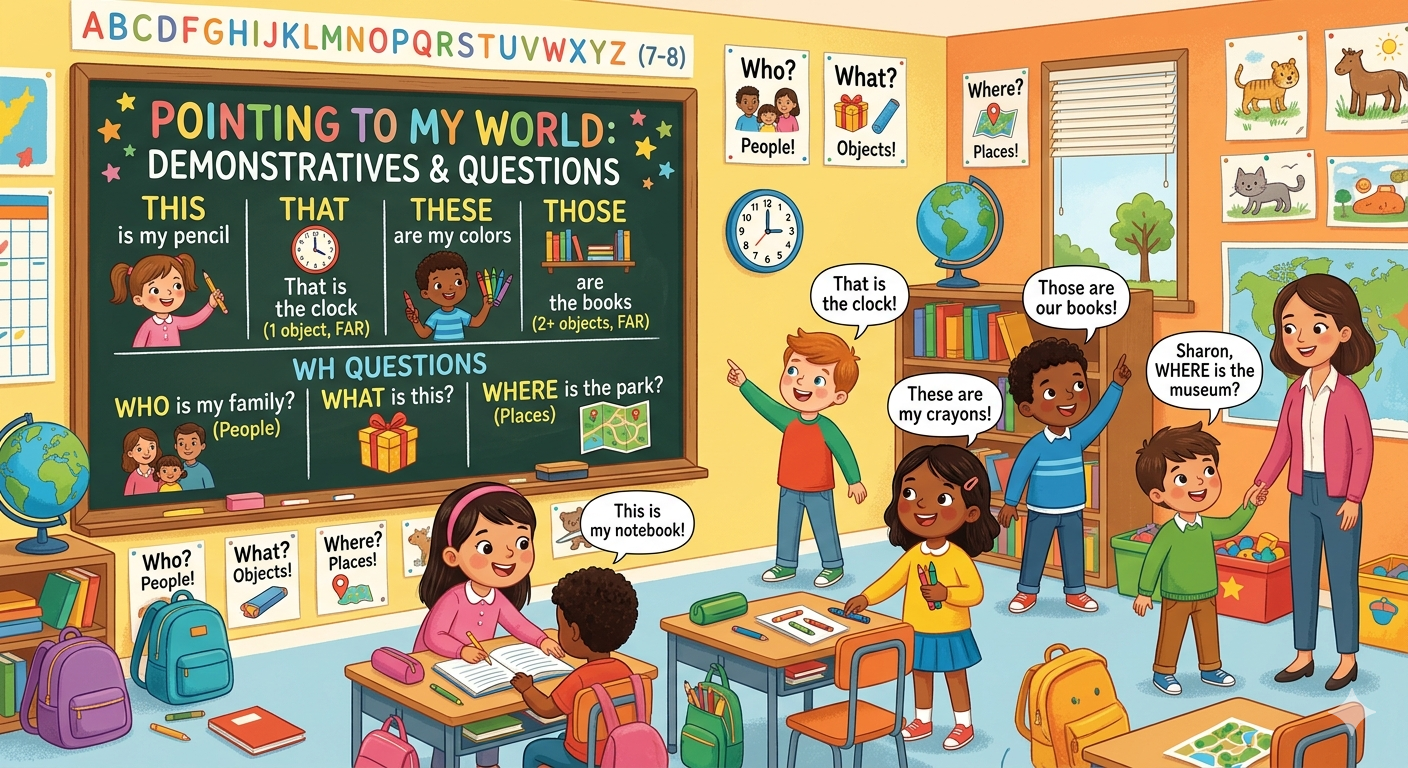
TEMA 4: POINTING TO MY WORLD: DEMONSTRATIVES & QUESTIONS
Objetivo: Utilizar los demostrativos (This, That, These, Those) para ubicar objetos en el espacio y aplicar preguntas WH- (Who, What, Where) para indagar sobre personas y elementos del entorno.
Concepto: La comunicación efectiva nace de nuestra capacidad para señalar lo que nos rodea y preguntar por lo que no conocemos. Aprender a diferenciar distancias y roles nos ayuda a interactuar con seguridad en nuestro salón y hogar.
Fecha: Lunes 03 de agosto del 2026
Actividad: «Cerca o Lejos». Iniciamos con una dinámica física usando un aro. Los objetos dentro del aro son This/These y fuera son That/Those. En la segunda hora, los niños dibujan su pupitre y etiquetan los útiles que tienen cerca usando «This is my pencil».
Fecha: Martes 04 de agosto del 2026
Actividad: «The Magic Pointer». Usamos punteros de cartulina para señalar objetos del salón. Sharon da la instrucción: «Point to those windows». En la segunda hora, realizan una ficha de asociación uniendo manos que señalan con la palabra correcta según la distancia.
Fecha: Miércoles 05 de agosto del 2026
Actividad: «Detectives de Objetos». Introducimos What. Jugamos a adivinar qué hay en una caja misteriosa preguntando: «What is this?». En la segunda hora, dibujan la caja y tres posibles objetos ocultos, escribiendo la pregunta y la respuesta.
Fecha: Lunes 10 de agosto del 2026
Actividad: «Who is Who?». Presentamos a los miembros de la comunidad escolar (Teacher, Janitor, Principal). Practicamos la pregunta «Who is that?». En la segunda hora, crean un mini-álbum de «Personas Importantes» de su colegio usando la estructura de pregunta y respuesta.
Fecha: Martes 11 de agosto del 2026
Actividad: «Where is the treasure?». Escondemos un peluche en el salón. Los niños deben preguntar «Where is it?» mientras se da pistas de «caliente o frío». En la segunda hora, dibujan un mapa del salón marcando con una X el lugar del hallazgo.
Fecha: Miércoles 12 de agosto del 2026
Actividad: «Singular vs. Plural». Clasificamos tarjetas en el tablero: una manzana (This/That) vs. muchas manzanas (These/Those). En la segunda hora, recortan imágenes de revistas y las pegan en dos columnas según sean uno o varios objetos.
Fecha: Lunes 17 de agosto del 2026
Actividad: «This is my Family». Los niños traen una foto o dibujo de su familia. Practicamos presentar a cada miembro: «This is my mom, those are my cousins». En la segunda hora, escriben oraciones cortas bajo su dibujo familiar reforzando el uso de demostrativos.
Fecha: Martes 18 de agosto del 2026
Actividad: «La Tienda Escolar». Simulamos una compra donde el «cliente» debe señalar qué quiere: «I want those cookies». En la segunda hora, diseñan billetes didácticos y etiquetas de precios para los productos de su tienda imaginaria.
Fecha: Miércoles 19 de agosto del 2026
Actividad: «Entrevista de Reporteros». En parejas, usan micrófonos de juguete para preguntarse: «What is your favorite color?» y «Where do you live?». En la segunda hora, registran las respuestas de su compañero en una «Ficha de Noticias».
Fecha: Lunes 24 de agosto del 2026
Actividad: «Simon Says: Demonstratives». Juego de comandos rápidos: «Touch this desk», «Point to those birds». En la segunda hora, resuelven un laberinto gramatical donde deben elegir el camino del demostrativo correcto para llegar a la meta.
Fecha: Martes 25 de agosto del 2026
Actividad: «Show and Tell». Cada niño trae un objeto especial y explica: «This is my favorite toy because…». Sharon ayuda con las preguntas del público (Who, What). En la segunda hora, dibujan el objeto de un compañero y escriben por qué es especial.
Fecha: Miércoles 26 de agosto del 2026
Actividad: «Taller de Preguntas Gigantes». Creamos dados con las palabras Who, What, Where. Al lanzarlo, deben formular una pregunta sobre el salón. En la segunda hora, decoramos los dados para usarlos en el repaso final.
Fecha: Lunes 31 de agosto del 2026
Actividad: «The Great Wall of Questions». Pegamos carteles por todo el salón con imágenes. Los niños deben pasar y escribir una pregunta WH- para cada imagen. En la segunda hora, corregimos juntos las estructuras en el tablero.
Fecha: Martes 01 de septiembre del 2026
Actividad: «Repaso: Cerca y Lejos en el Patio». Salimos al patio para identificar elementos grandes (nubes, árboles, porterías) usando Those y That. En la segunda hora, regresamos a plasmar la experiencia en un dibujo panorámico etiquetado.
Fecha: Miércoles 02 de septiembre del 2026
Actividad: «Final Project Prep: My World Guide». Los niños eligen 5 objetos o personas de su entorno para su guía final. En la segunda hora, inician la decoración de las portadas de sus guías utilizando materiales brillantes.
Fecha: Lunes 07 de septiembre del 2026
Actividad: «Ensayos de Presentación». Practicamos el uso de la voz y el gesto de señalar para la exposición final. En la segunda hora, Sharon realiza una retroalimentación individual sobre la pronunciación de These y Those.
Fecha: Martes 08 de septiembre del 2026
Actividad: PROYECTO FINAL: «The Pointer Experts». Los estudiantes presentan sus guías ante el grupo, demostrando que pueden señalar y preguntar sobre su mundo con seguridad. Evaluación formativa de fluidez y uso de estructuras.
Fecha: Miércoles 09 de septiembre del 2026
Actividad: CIERRE DEL PERIODO. Entrega de medallas de «Maestros del Lenguaje». Bingo final integrando todos los temas del periodo y merienda compartida para celebrar los logros alcanzados.