
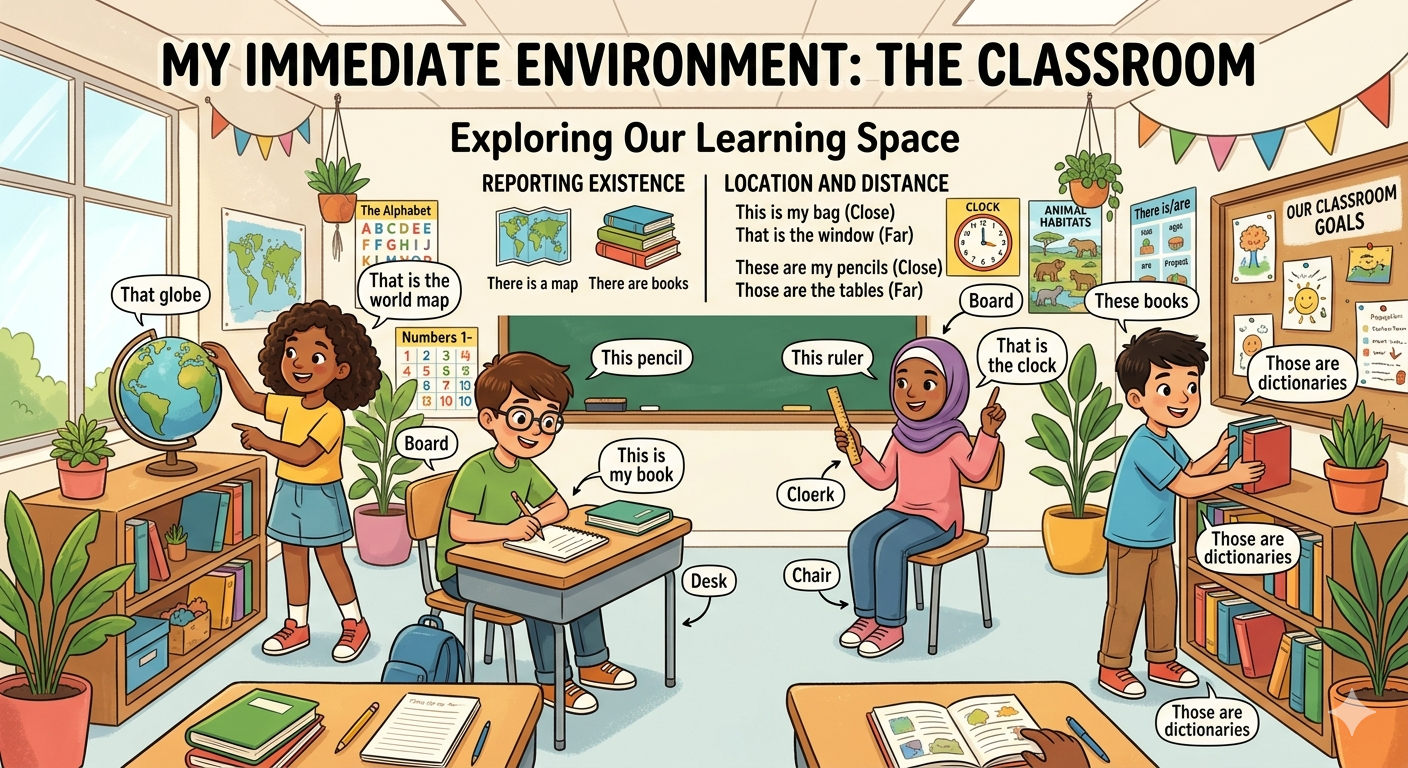
Objetivo: Reconocer objetos escolares y reportar su existencia y ubicación
utilizando las estructuras There is/There are y los demostrativos (This, That, These,
Those).
Concepto: El salón de clases es nuestro segundo hogar. Los School Objects son
nuestros aliados. Aprender a decir «Hay» (There is/are) y señalar si algo está cerca
o lejos (Demostrativos) nos da orden y control sobre nuestro espacio de
aprendizaje.
Fecha: Lunes 04 de mayo del 2026 Actividad: «El Espía del Salón». Usamos lupas de papel para buscar objetos específicos que la docente nombra. En la segunda hora, iniciamos el «Mapa de Coordenadas»: los niños dibujan su pupitre y etiquetan los 4 objetos que tienen más cerca, trabajando el vocabulario de útiles escolares.
Fecha: Martes 05 de mayo del 2026 Actividad: «Simon Says: Classroom Edition». Trabajamos comandos de acción con objetos («Pick up the pencil», «Touch the board»). En la segunda hora, creamos un «Móvil de Vocabulario» colgando dibujos de objetos escolares con sus nombres en inglés para decorar las ventanas del salón.
Fecha: Miércoles 06 de mayo del 2026 Actividad: «La Tienda de Útiles». Simulamos una compra donde los niños deben pedir objetos: «Can I have a red pen, please?». En la segunda hora, registran en el cuaderno una lista de «Precios Imaginarios» para sus útiles, practicando números y nombres de objetos simultáneamente.
Fecha: Lunes 11 de mayo del 2026 Actividad: «Introducción a las Preposiciones». Usamos una caja y una pelota para mostrar In, On, Under. Los niños imitan las posiciones con su cartuchera y un lápiz. En la segunda hora, dibujan tres escenas en el cuaderno ilustrando dónde está el gato respecto a la mesa, fijando la relación espacial.
Fecha: Martes 12 de mayo del 2026 Actividad: «Escondite de Objetos». La docente esconde un borrador y da pistas: «It is under the chair». El que lo encuentre gana un sticker. En la segunda hora, resuelven un laberinto visual en el cuaderno donde deben escribir la ubicación de los objetos encontrados.
Fecha: Miércoles 13 de mayo del 2026 Actividad: «Mi Salón en 3D». Usando plastilina, moldeamos los objetos principales del salón (Desk, Chair, Board). En la segunda hora, los ubicamos sobre un cartón y escribimos pequeñas etiquetas con preposiciones: «The pencil is ON the desk».
Fecha: Lunes 18 de Mayo del 2026 Actividad: «El Dictado Loco». Los niños deben dibujar lo que la docente dice, por ejemplo: «There is a blue ruler on the floor». En la segunda hora, comparan sus dibujos con los de sus compañeros para corregir errores de ubicación y color.
Fecha: Martes 19 de mayo del 2026 Actividad: «Gallery Walk de Objetos». Exponemos los útiles más bonitos del salón. Los niños caminan y dicen: «This is a notebook» o «That is a backpack». En la segunda hora, crean un minilibro de «Mis tesoros escolares» con descripciones breves de sus objetos favoritos.
Fecha: Miércoles 20 de mayo del 2026 Actividad: «Bingo de Ubicación». En lugar de solo el nombre, la docente dice la posición: «The pen is IN the bag». Los niños marcan la imagen correcta. Cerramos la hora con una canción rítmica sobre las preposiciones para reforzar la memoria auditiva.
Fecha: Lunes 25 de mayo del 2026 Actividad: «Repaso de Plurales». Aprendemos cómo cambian los objetos de uno a muchos (Pencil -> Pencils). En la segunda hora, clasificamos recortes de revistas en dos columnas: «One» y «Many», preparándonos para la estructura There is/are.
Fecha: Martes 26 de mayo del 2026 Actividad: «El Inventario del Inspector». Con una tabla de chequeo, los niños cuentan cuántos objetos de cada tipo hay en su fila. En la segunda hora, grafican los resultados en el cuaderno usando barras de colores y nombres en inglés.
Fecha: Miércoles 27 de mayo del 2026 Actividad: «Cierre de Mayo: Mi Lugar Favorito». Los niños dibujan el rincón del salón que más les gusta y escriben tres oraciones describiéndolo: «There is a chair. The book is on the table.» Cerramos con una reflexión sobre el cuidado de nuestro «segundo hogar»